Designing your pitch for leadership
Dec 03, 2025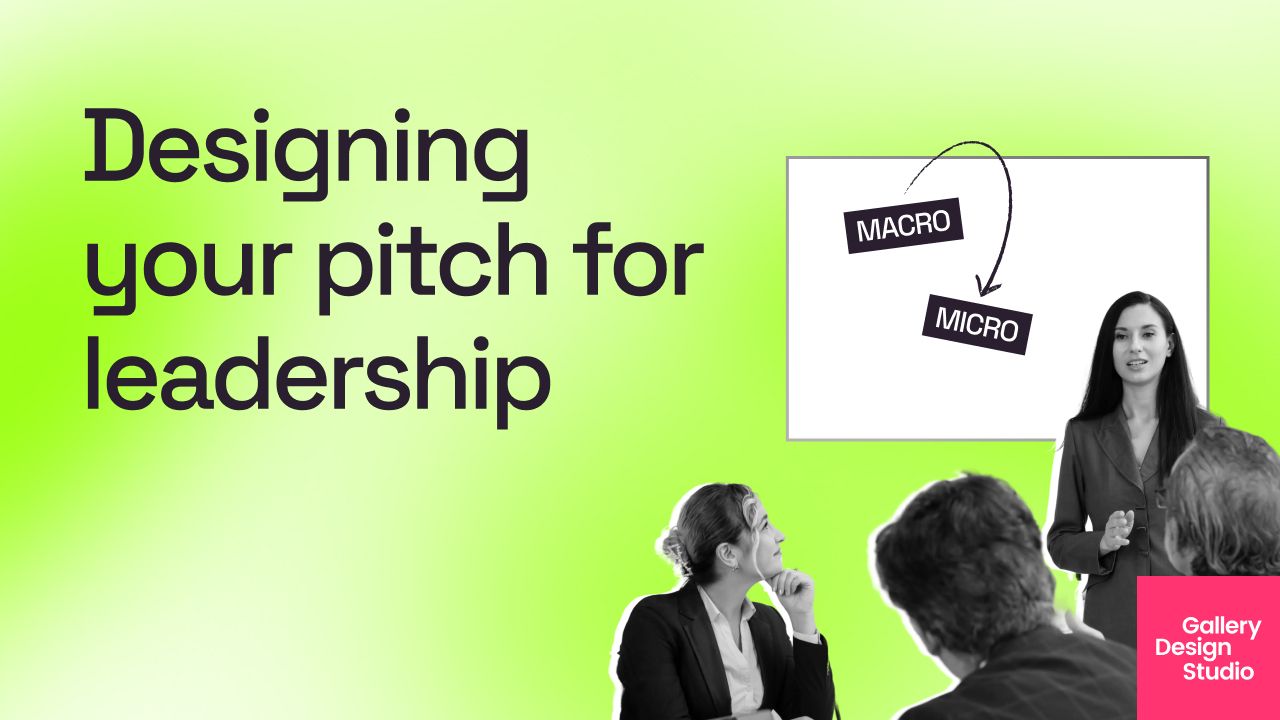
Sometimes great ideas fall flat — not because the work wasn’t strong, but because it wasn’t pitched right. The thinking was sharp, the effort was there, but the presentation lost the room within seconds.
How teams present is just as important as what they present.
Creative teams often spend hours perfecting the work… but maybe five minutes thinking about how to present it.
And that’s where they lose perceived value.
Leadership doesn’t always see the value of what a team has done — not because the work isn’t good, but because it’s not framed in a way that fits how executives think or what they care about.
Leaders make fast, high-level decisions. They don’t have time to wade through every design detail. Yet too often, content leads with the details instead of the why it matters to the business.
The gap isn’t creativity — it’s translation.
And here’s the bigger point: marketing and design are both forms of empathy. The designer’s job is to step into the shoes of the audience — whether that’s the customer seeing the ad, or the executive reviewing work. If they don’t get it, it’s on the team to make it clear.
What To Do
Everyone needs to learn to pitch like strategists — not just show like designers. That means:
- Start macro → Frame the business problem and objective first.
What this looks like: have talking points ready in a short Figma deck (10 slides max) and include an agenda page so leadership can follow the flow instantly. - Then micro → Walk through creative rationale, but briefly.
What this looks like: expand on the big-picture outline, but don’t get stuck explaining every choice. Once leadership understands the full context, their feedback will be sharper and more useful. - End with impact → Tie it all back to what leadership actually cares about.
What this looks like: go back to the brief. Why does this project even exist? What was the goal of this booth/video/eBook? Tie creative decisions to the outcome the client or company needs. - Show, don’t tell → When referencing an event, show a screenshot. When comparing three booth options, show rough renders side by side. Visual references and comparisons let executives understand direction in seconds. (Learn more about showing, not telling)
Takeaway
Creative teams need to see presentation as part of the craft. Visual thinking shouldn’t stop at the work; it should extend to how we communicate the work.
If leadership doesn’t “get it,” it’s not because they don’t care; it’s because teams didn’t make it easy to understand.
Don’t just design deliverables, design the delivery.
Learn more about getting leadership on board.
About Gallery Design Studio
What We Do
We help B2B and B2G tech companies explain what they do—faster, clearer, and more persuasively—through visual content that drives understanding and accelerates sales.
Why It Matters
Most content is too slow, too vague, or too complicated. We fix that by combining strategic design thinking with creative firepower—so the message lands and moves buyers forward.
How We Work
We move fast, but we think first. This isn’t a content vending machine—it’s a partnership. Expect a team deep in the work: noodling in Figma, building decks, storyboarding product videos, and pushing ideas forward before a brief even exists. We think like owners, not order-takers.