
What If “Make It Pretty” Is What Matters?
Jun 10, 2026
Author: Caroline Petersen | Editor: Steve Korver | Imagery: Zoe Mazlin
Reading time: 5 min
The companies that win aren’t just better. They look it.
Half Right
For years, I have told clients that good design is not just about making things pretty. Great communication design resolves the friction of being misunderstood. It closes the gap between what a company knows about itself and what the market understands. It signals value before a sales call begins. It aligns the quality of a solution with the quality of its presentation. I still believe that. But I got it half right. The half I missed is beauty itself.
What Beautiful Things Have in Common
Consider the objects people value most. A luxury watch tells time. A well-designed car moves you from one place to another. A staged home functions identically to an unstaged one. A restaurant serves food whether or not anyone thought about the lighting. None of these things function better because they are beautiful.
And yet beauty is the one thing they all share. Each one was crafted with care and intention. Every detail considered. That is what separates them from their generic equivalents. It is why people seek them out, pay more for them, and remember them long after the experience ends.
What We Choose to Surround Ourselves With
Beautiful things make us feel something. They change how we remember an experience, how much trust we extend, how much desire or meaning we attach to something. They shape how we tell our own story, through the homes we curate, the wardrobes we build, the art we hang on walls no one requires us to decorate.
The objects people surround themselves with are never just objects. Self-expression is not vanity. It is how people show the world who they are and what they value.
Beauty Reveals, Generic Obscures
There is an old idea that beauty is the splendor of truth. In business, that holds. A company that presents itself beautifully is not decorating the truth. It is revealing it. Generic presentation obscures the quality of what sits behind it. Intentional, beautiful communication exposes it.
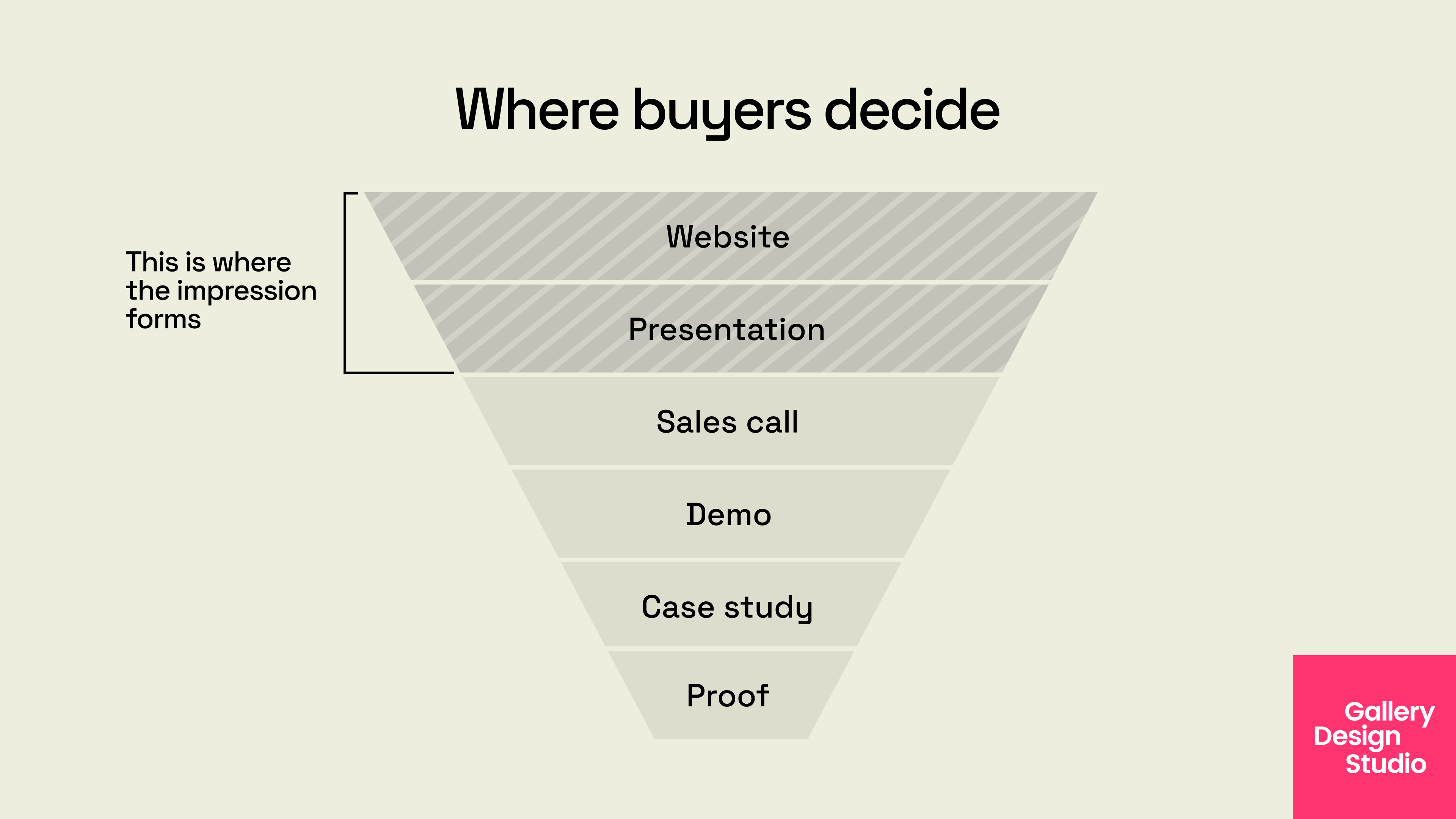
When a high-growth technology company shows up with generic materials, buyers read it as a signal before a single word is spoken. Not a signal about the product. A signal about how much care went into the presentation of it. A beautiful product wrapped in careless communication creates doubt. It tells the market the company does not yet see itself the way it wants to be seen. That doubt costs deals. It stalls leads and slows the cycle. It forces sales teams to earn back in conversation what a strong visual would have given them for free.
Communication Is Part of the Product
Buyers form their first impression through communication, not product. The website loads before the case study. The deck arrives before the demo. And when that communication is beautiful, when it is considered and crafted with the same care as the solution it represents, it does not just inform. It builds trust. It signals quality. It makes the person across the table feel the company behind it took the work seriously. That communication is part of the product, whether the company treats it that way or not.
The Contrast Advantage
This matters more now, not less. Every day, the market fills with fast, generic, AI-generated content. Volume is up. Distinction is flat. The companies that invest in intentional, beautiful communication stand apart by contrast alone.
The question was never whether beauty matters. The question is why it took us this long to say it plainly.
About Gallery Design Studio
Gallery Design Studio is a go-to-market creative partner for high-growth B2B technology companies. We work with a select number of companies to plan, structure, and produce the strategic visual content that moves complex deals forward. By invitation only. gallerydesignstudio.com


